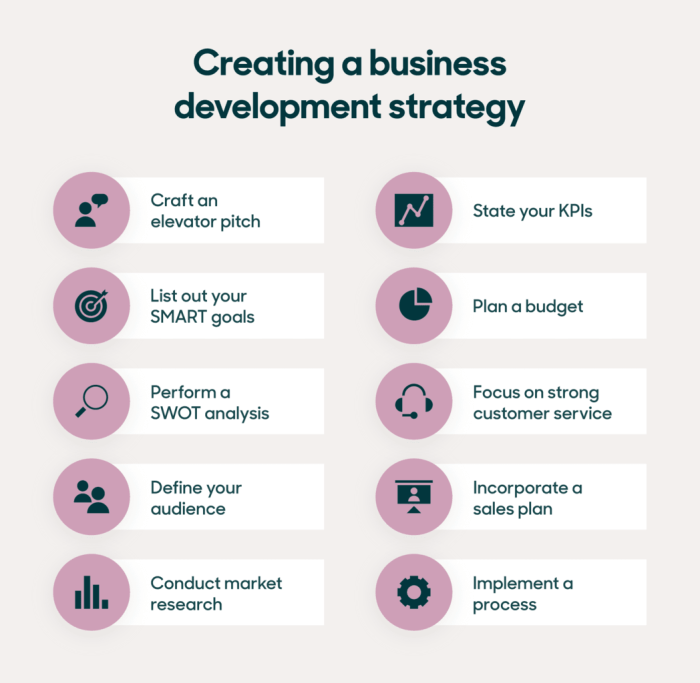
Successfully navigating the complexities of business growth requires a well-defined strategy. This guide delves into the multifaceted world of business development, exploring key components from market analysis and target audience identification to ethical considerations and securing funding. We’ll examine diverse sales and marketing strategies, the crucial role of business coaching, and the impact of various business models. Through real-world examples and a practical framework, this exploration aims to equip you with the knowledge and tools necessary to formulate and implement effective business development strategies tailored to your specific needs.
From understanding your target market and crafting compelling marketing campaigns to navigating ethical dilemmas and securing necessary funding, we cover the essential elements for sustainable business growth. We’ll explore various business models, the importance of business travel, and the benefits of mentorship and guidance in achieving your goals. This comprehensive overview provides a solid foundation for building a thriving and ethical enterprise.
Defining Business Development Strategies
Business development strategies are the blueprints for achieving sustainable growth and competitive advantage. They encompass a range of activities designed to expand a company’s market reach, improve its product offerings, and strengthen its overall position within its industry. Effective strategies are proactive, data-driven, and adaptable to changing market conditions.Core Components of Effective Business Development StrategiesEffective business development strategies share several key components.
These include a clear understanding of the target market, a well-defined value proposition, a robust go-to-market strategy, a commitment to building strong relationships with key stakeholders, and a system for tracking and measuring progress. A strong understanding of the competitive landscape is also crucial, allowing for proactive adaptation and differentiation. Furthermore, a well-defined budget and resource allocation plan is essential for successful implementation.
Examples of Business Development Strategies Across Industries
The optimal business development strategy varies significantly depending on the industry, company size, and market conditions. Several examples illustrate this diversity. A technology startup might focus on securing venture capital funding and establishing strategic partnerships to accelerate product development and market penetration. In contrast, an established manufacturing company might prioritize expanding into new geographic markets through strategic acquisitions or joint ventures.
A retail business might concentrate on enhancing its online presence and improving customer experience through loyalty programs and personalized marketing campaigns. Finally, a service-based company might focus on building its reputation through strong client relationships and referral programs.
Case Study: The Success of Starbucks’ Global Expansion
Starbucks’ global expansion provides a compelling case study in successful business development. Their strategy involved a multi-faceted approach: identifying and entering new markets with significant growth potential; adapting their product offerings to suit local tastes and preferences; establishing strong relationships with local suppliers and partners; and investing heavily in branding and marketing to build brand recognition and loyalty. This strategy, combined with consistent quality and a strong customer focus, has led to Starbucks’ remarkable global success.
The company’s meticulous market research and adaptation to local cultures have been key factors in their international expansion.
Framework for Evaluating Business Development Strategy Effectiveness
Evaluating the effectiveness of a business development strategy requires a structured approach. A suitable framework should incorporate both quantitative and qualitative metrics. Quantitative metrics might include revenue growth, market share, customer acquisition cost, and return on investment (ROI). Qualitative metrics might include brand awareness, customer satisfaction, and stakeholder relationships. Regular monitoring of these metrics, combined with periodic reviews and adjustments to the strategy, is essential for ensuring continued success.
A key performance indicator (KPI) dashboard, regularly updated and analyzed, would be instrumental in this process. This allows for timely identification of areas needing improvement and allows for data-driven decision-making.
Market Analysis and Target Audience Identification
Understanding your market and identifying your ideal customer are crucial for business success. A well-defined market analysis provides the foundation for effective marketing strategies, resource allocation, and ultimately, profitability. Without this crucial step, businesses risk wasting resources on ineffective campaigns and failing to reach their desired customer base.
Steps in Conducting a Thorough Market Analysis
A comprehensive market analysis involves a systematic investigation of various factors influencing the success of a product or service within a specific market. This process typically involves several key steps, each contributing to a holistic understanding of the market landscape. These steps are iterative and often require refinement as new information emerges.
- Defining the Market Scope: Clearly outlining the geographic area, product category, and customer segments to be included in the analysis. For example, a market analysis for a new organic coffee brand might focus on a specific region (e.g., the West Coast of the US) and target customers interested in ethically sourced and sustainable products.
- Gathering Secondary Data: Collecting readily available information from sources like market research reports, industry publications, government statistics, and competitor websites. This stage provides a broad overview of market size, trends, and competitive landscape. Analyzing data from the US Census Bureau, for instance, can provide demographic insights useful in defining target audiences.
- Conducting Primary Research: Gathering original data through methods like surveys, focus groups, and interviews. This allows for direct feedback from potential customers and a deeper understanding of their needs and preferences. For example, conducting customer surveys can reveal unmet needs or preferences that can inform product development and marketing strategies.
- Analyzing Competitive Landscape: Identifying key competitors, analyzing their strengths and weaknesses, and understanding their market positioning. This analysis informs strategies for differentiation and competitive advantage. A SWOT analysis (Strengths, Weaknesses, Opportunities, Threats) is a common tool used in this step.
- Market Sizing and Forecasting: Estimating the current and future size of the market, considering factors like market growth rates and potential disruptions. This informs decisions regarding investment and resource allocation. Predictive modeling techniques, combined with historical data, can be used to forecast future market demand.
Key Characteristics of Ideal Target Audiences
The ideal target audience varies significantly depending on the business type and product or service offered. However, some common characteristics can be identified across different industries.
- B2C (Business-to-Consumer): Focuses on demographics (age, gender, income, location), psychographics (lifestyle, values, interests), and buying behavior (purchase frequency, brand loyalty). For example, a new line of athletic wear might target young, health-conscious adults with a high disposable income who are active on social media.
- B2B (Business-to-Business): Emphasizes industry, company size, decision-making processes, and specific needs. A software company targeting small businesses, for instance, would focus on companies with specific technological challenges and limited IT budgets.
- NPO (Non-Profit Organization): Considers the needs of beneficiaries, donors, and volunteers. A charity focused on animal welfare might target individuals with a strong passion for animal rights and a history of donating to similar causes.
Methods for Segmenting Target Markets
Market segmentation involves dividing a broad target market into smaller, more homogeneous groups based on shared characteristics. This allows for more targeted and effective marketing efforts.
- Demographic Segmentation: Dividing the market based on factors like age, gender, income, education, occupation, family size, and ethnicity. For example, a luxury car manufacturer might target high-income individuals aged 45-65.
- Psychographic Segmentation: Grouping customers based on their lifestyle, values, attitudes, interests, and personality traits. A company selling eco-friendly products might target environmentally conscious consumers who prioritize sustainability.
- Behavioral Segmentation: Categorizing customers based on their purchasing habits, brand loyalty, usage rate, and responsiveness to marketing efforts. A subscription box service might target customers with a history of purchasing similar products online.
Target Customer Profile: “SmartHome” Smart Speaker
Let’s create a profile for a hypothetical new product: a smart speaker called “SmartHome” designed for elderly individuals living independently.
| Characteristic | Description |
|---|---|
| Demographics | Age: 65+, Income: Middle to Upper-Middle Class, Location: Suburban areas with reliable internet access |
| Psychographics | Tech-savvy but may require user-friendly interface, value safety and security, appreciate convenience and ease of use, concerned about health and well-being |
| Needs | Easy-to-use voice control for home automation (lights, thermostat), emergency call button, medication reminders, access to family and friends via video call, integration with healthcare monitoring devices. |
| Pain Points | Difficulty using complex technology, concerns about falls or emergencies, loneliness and isolation, managing medication schedules. |
Sales and Marketing Strategies
A successful business development plan hinges on a tightly integrated sales and marketing strategy. Effective alignment ensures that marketing efforts generate qualified leads that sales teams can efficiently convert into customers, maximizing return on investment (ROI) and driving sustainable growth. This section will explore the synergy between sales and marketing, examine various sales methodologies, and illustrate effective marketing campaigns.The integration of sales and marketing is crucial for optimizing the customer journey.
Marketing activities should focus on attracting and nurturing potential customers, while sales teams concentrate on closing deals and building lasting relationships. Effective communication and data sharing between these two departments are vital to ensure a seamless transition between lead generation and conversion. A shared understanding of target audience preferences, messaging, and key performance indicators (KPIs) is essential for achieving this synergy.
Inbound vs. Outbound Sales Methodologies
Inbound and outbound sales represent distinct approaches to lead generation and customer acquisition. Inbound sales focuses on attracting potential customers through valuable content and organic marketing efforts. This includes blog posts, optimization, social media engagement, and email marketing, aiming to draw customers to the business. Outbound sales, conversely, involves actively reaching out to potential customers through direct methods such as cold calling, email outreach, and direct mail.
While inbound emphasizes attracting the customer, outbound focuses on proactively seeking them out. Each approach has its strengths and weaknesses, and a blended approach often proves most effective. For instance, a company might use inbound marketing to generate leads and then use outbound tactics to nurture those leads and close deals.
Examples of Effective Marketing Campaigns
Effective marketing campaigns are data-driven, targeted, and measurable. Consider a hypothetical scenario: A new sustainable clothing brand could launch a social media campaign showcasing the eco-friendly materials and ethical production processes. This campaign could involve influencer collaborations, user-generated content, and targeted advertising on platforms frequented by environmentally conscious consumers. Another example might involve a local bakery using a loyalty program coupled with email marketing to reward repeat customers and encourage referrals.
This strategy leverages customer relationship management (CRM) data to personalize communication and build brand loyalty. The success of these campaigns is measured through key metrics such as website traffic, social media engagement, conversion rates, and customer lifetime value.
Multi-Channel Marketing Strategy
A comprehensive multi-channel marketing strategy uses a combination of digital and traditional media to reach the target audience. This could include:
- Digital Marketing: Search Engine Optimization (), Pay-Per-Click (PPC) advertising, social media marketing (organic and paid), email marketing, content marketing (blogging, infographics, videos), and online advertising.
- Traditional Marketing: Print advertising (newspapers, magazines), direct mail marketing, radio advertising, television advertising, and public relations (press releases, media outreach).
A successful multi-channel strategy integrates these channels seamlessly, ensuring consistent branding and messaging across all platforms. For example, a company could use social media to build brand awareness, email marketing to nurture leads, and paid search advertising to drive traffic to its website. The effectiveness of this approach lies in its ability to reach a wider audience and create a more engaging and personalized customer experience.
Tracking and analyzing the performance of each channel allows for optimization and resource allocation to maximize ROI.
Business Development and Ethics
Building a successful business requires more than just a sharp strategy; it demands unwavering ethical conduct. Transparency and integrity are the cornerstones of sustainable growth, fostering trust with clients, partners, and the wider community. A commitment to ethical practices not only protects a company’s reputation but also enhances its long-term viability and profitability.
Transparency and Integrity in Business Development
Transparency involves open and honest communication in all business dealings. This includes being upfront about pricing, contracts, and potential risks. Integrity, on the other hand, refers to adhering to strong moral principles and acting in a fair and honest manner, even when faced with difficult choices. A business development strategy built on these principles ensures that all stakeholders are treated equitably and with respect.
For instance, a company might transparently disclose its sustainability practices, showing its commitment to environmental responsibility and building trust with environmentally conscious consumers. This approach is not just ethical; it also attracts investors and customers who value such transparency.
Potential Conflicts of Interest and Mitigation Strategies
Conflicts of interest arise when a business development professional’s personal interests clash with the interests of their company or clients. These conflicts can range from accepting gifts from potential clients to using company resources for personal gain. To mitigate such conflicts, companies should establish clear policies regarding gifts, entertainment, and personal investments. Regular training on ethical conduct and conflict of interest management is crucial for employees.
A robust system for reporting and investigating potential conflicts of interest should also be in place. For example, a business development manager should disclose any personal financial interests in a potential client company to avoid bias in decision-making. The company’s ethical guidelines should then dictate how to proceed, potentially involving recusal from the project or a complete transparency of the interest to all stakeholders.
Ethical Dilemmas and Resolutions
Ethical dilemmas are inevitable in business. Consider a scenario where a business development team discovers that a competitor is engaging in unethical practices to secure a contract. Should the team report the competitor, risking potential retaliation? Or should they focus on their own ethical strategy, potentially losing the contract? Another example might involve a client requesting a shortcut that compromises quality or safety standards.
The resolution to these dilemmas requires careful consideration of all stakeholders and a commitment to upholding the company’s ethical values. In the first scenario, the team could choose to report the unethical behavior to the relevant authorities while maintaining their focus on ethical business practices. In the second, a refusal to compromise quality, accompanied by a detailed explanation of the potential risks and long-term consequences, might lead to a better outcome.
A strong ethical foundation ensures that decisions are made based on principles, not just short-term gains.
Code of Conduct for Business Development Professionals
A comprehensive code of conduct should guide the actions of business development professionals. It should emphasize:* Honesty and Transparency: All interactions should be characterized by honesty and open communication.
Fair Dealing
All stakeholders should be treated fairly and equitably.
Confidentiality
Confidential information should be protected at all times.
Compliance
All activities should comply with relevant laws and regulations.
Conflict of Interest Management
Potential conflicts of interest should be identified and mitigated proactively.
Professional Development
Continuous learning and development to stay abreast of ethical best practices.This code should be readily accessible to all employees and regularly reviewed to ensure its continued relevance and effectiveness. Adherence to this code fosters a culture of ethical conduct within the organization, strengthening its reputation and long-term success.
The Role of Business Coaching in Development
Business coaching plays a vital role in enhancing business development efforts by providing focused guidance, accountability, and strategic insights that can significantly improve a company’s performance and trajectory. A skilled coach acts as a catalyst, helping business owners and managers identify and overcome obstacles, unlock their potential, and achieve ambitious goals more efficiently. This support extends beyond simple advice; it involves a collaborative process of self-discovery and strategic planning tailored to the specific needs of the business.Effective business coaching goes beyond simply offering advice; it’s about facilitating growth and fostering self-reliance.
A coach acts as a sounding board, challenging assumptions and prompting critical self-reflection. This process empowers business leaders to develop their own solutions and build sustainable strategies. The partnership between coach and client is crucial, creating a safe space for vulnerability and honest self-assessment.
Effective Coaching Techniques for Improved Business Performance
Several proven coaching techniques contribute to improved business performance. These techniques focus on enhancing self-awareness, clarifying goals, and developing actionable strategies. For example, the GROW model (Goal, Reality, Options, Will) provides a structured framework for goal setting and problem-solving. Another technique, appreciative inquiry, focuses on identifying and building upon existing strengths rather than dwelling on weaknesses. By focusing on positive aspects and successful past experiences, this method fosters optimism and encourages innovative solutions.
Finally, action learning involves tackling real-world business challenges through collaborative problem-solving and reflective practice. This hands-on approach promotes rapid learning and skill development.
Benefits of Mentorship and Guidance in Achieving Business Goals
Mentorship and guidance are invaluable assets in achieving business goals. Experienced mentors offer a wealth of knowledge and practical experience, providing invaluable insights and avoiding common pitfalls. They can act as sounding boards, offering objective perspectives and challenging assumptions. This guidance can be particularly beneficial during periods of rapid growth or significant change, where navigating complex decisions requires expert insight.
Moreover, the support and encouragement provided by a mentor can significantly boost morale and confidence, fostering resilience and driving sustained progress toward achieving ambitious goals. A mentor’s network can also open doors to new opportunities and partnerships, accelerating growth and expanding business horizons. For example, a seasoned entrepreneur mentoring a startup founder can provide crucial guidance on securing funding, navigating regulatory hurdles, and building a strong team.
A Coaching Program Focused on Improving Strategic Planning Skills
This program focuses on enhancing strategic planning skills, a crucial aspect of successful business development. The program is designed as a six-month commitment, with monthly one-on-one coaching sessions and weekly assignments.The program’s structure includes:* Month 1: Self-Assessment and Goal Setting: Participants identify their current strategic planning strengths and weaknesses through self-assessment exercises and discussions. They define specific, measurable, achievable, relevant, and time-bound (SMART) goals for improving their strategic planning skills.
Month 2
Environmental Scanning and Analysis: Participants learn techniques for conducting thorough environmental scans, analyzing industry trends, competitive landscapes, and market opportunities. They practice identifying key factors influencing their business and developing relevant scenarios.
Month 3
SWOT Analysis and Strategic Choice: Participants delve into SWOT analysis (Strengths, Weaknesses, Opportunities, Threats), learning to effectively assess their internal capabilities and external environment. They practice formulating strategic choices based on their analysis and prioritizing key initiatives.
Month 4
Resource Allocation and Implementation: Participants learn to allocate resources effectively to support their strategic priorities. They develop detailed implementation plans, including timelines, responsibilities, and key performance indicators (KPIs).
Month 5
Monitoring and Evaluation: Participants establish mechanisms for monitoring progress, tracking KPIs, and evaluating the effectiveness of their strategies. They learn to adapt their plans based on performance data and emerging trends.
Month 6
Refinement and Long-Term Vision: Participants refine their strategic plans based on the learnings from the previous months. They develop a long-term vision for their business, incorporating lessons learned and anticipating future challenges and opportunities. This culminates in a comprehensive strategic plan document.
Securing Business Loans and Funding
Securing adequate funding is crucial for the success of any business venture. The availability of capital directly impacts a company’s ability to grow, innovate, and weather economic downturns. Understanding the various funding options and the application process is therefore paramount for entrepreneurs and business owners. This section will explore different avenues for securing business loans and funding, outlining the application process and providing a practical example of financial projection for loan application support.
Types of Business Loans and Funding
Businesses have access to a diverse range of funding options, each with its own advantages and disadvantages. The most suitable choice depends heavily on factors like the business’s stage of development, credit history, and the intended use of funds. Common options include bank loans, Small Business Administration (SBA) loans, lines of credit, merchant cash advances, and equity financing.
Bank Loans
Bank loans are traditional financing options offered by commercial banks and credit unions. They typically require a detailed business plan, financial statements, and personal guarantees. Interest rates and repayment terms vary depending on the borrower’s creditworthiness and the loan amount. Bank loans are suitable for businesses with established credit history and a clear business plan demonstrating the ability to repay the loan.
Small Business Administration (SBA) Loans
SBA loans are government-backed loans offered through participating lenders. They are designed to assist small businesses with securing financing, often with more favorable terms than conventional bank loans. The SBA guarantees a portion of the loan, reducing the lender’s risk and making it easier for small businesses to qualify. However, the application process can be more complex and time-consuming than for a standard bank loan.
These loans are particularly helpful for startups or businesses with limited credit history.
Lines of Credit
A line of credit provides businesses with access to a predetermined amount of funds that can be borrowed and repaid multiple times within a specified period. This flexibility makes it ideal for businesses with fluctuating cash flow needs. Interest is typically only charged on the borrowed amount, making it a cost-effective option for managing short-term financial needs. However, businesses need to maintain a good credit score to qualify for a favorable line of credit.
Merchant Cash Advances
Merchant cash advances are short-term financing options where businesses receive a lump sum of money in exchange for a percentage of their future credit card sales. They are often used by businesses with consistent credit card sales and require no collateral. While convenient, merchant cash advances often come with high fees and interest rates, making them a less attractive option for long-term financing.
Equity Financing
Equity financing involves raising capital by selling a portion of the business’s ownership to investors, such as angel investors or venture capitalists. This option doesn’t require repayment of the funds but dilutes the existing owners’ stake in the company. Equity financing is often sought by startups with high growth potential but limited access to traditional financing.
Applying for a Business Loan
The process of applying for a business loan generally involves several steps. First, you need to prepare a comprehensive business plan outlining the business’s goals, market analysis, and financial projections. Next, gather necessary financial documents, including tax returns, bank statements, profit and loss statements, and balance sheets. The application itself typically involves completing a loan application form, providing supporting documentation, and undergoing a credit check.
Finally, the lender will review the application and make a decision based on the borrower’s creditworthiness and the business’s financial health.
Financial Projection Model for Loan Application
Let’s consider a fictional coffee shop, “The Daily Grind,” seeking a $50,000 loan to expand its operations.
| Year | Revenue | Cost of Goods Sold | Gross Profit | Operating Expenses | Net Income |
|---|---|---|---|---|---|
| 1 | $100,000 | $30,000 | $70,000 | $50,000 | $20,000 |
| 2 | $150,000 | $45,000 | $105,000 | $60,000 | $45,000 |
| 3 | $200,000 | $60,000 | $140,000 | $70,000 | $70,000 |
This projection demonstrates The Daily Grind’s ability to generate sufficient revenue and profit to repay the loan within a reasonable timeframe. This table, along with a detailed business plan, would strengthen their loan application. Note that these are projected figures and actual results may vary. Realistic projections based on market research and industry benchmarks are crucial for a successful loan application.
Business Models and Strategies
Choosing the right business model is crucial for success. It dictates how a company creates, delivers, and captures value. Understanding the nuances of various models and their impact on development strategies is paramount for sustainable growth. This section explores different business models, their implications, and successful adaptations.
Comparison of Business Models
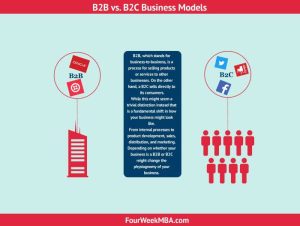
Different business models cater to different market needs and operational structures. Business-to-Business (B2B) models involve transactions between businesses, often characterized by longer sales cycles and higher-value transactions. Business-to-Consumer (B2C) models focus on direct sales to individual consumers, typically involving shorter sales cycles and potentially higher transaction volumes. Subscription models generate recurring revenue by offering ongoing access to products or services.
Each model demands unique strategies for business development. For example, B2B models might prioritize relationship building and strategic partnerships, while B2C models may focus on branding, marketing, and customer acquisition. Subscription models require strong customer retention strategies and continuous value delivery.
Impact of Business Model on Development Strategies
The chosen business model fundamentally shapes a company’s development trajectory. A B2B company might invest heavily in sales teams and relationship management software, while a B2C company might prioritize digital marketing and e-commerce platforms. A subscription business will focus on customer success and retention programs to maintain recurring revenue streams. Furthermore, the chosen model influences funding strategies. A B2B company with large, infrequent transactions might seek venture capital, while a subscription business with predictable revenue might attract debt financing.
Examples of Successful Business Model Adaptations
Netflix provides a compelling example of business model adaptation. Initially a DVD rental service (B2C), Netflix successfully transitioned to a streaming subscription model (also B2C, but with a different revenue stream), dramatically expanding its market reach and revenue potential. Similarly, Adobe shifted from a licensing model for its software to a subscription model, creating a more predictable and recurring revenue stream.
This adaptation required a significant shift in their marketing and customer service strategies.
Designing a New Business Model: Personalized Fitness Coaching
Consider a new business model for the fitness industry: a personalized, AI-powered fitness coaching platform. This platform would leverage wearable technology and AI algorithms to create customized workout plans and nutritional guidance for each user. The business model would be a subscription-based service (B2C), offering various tiers of service based on features and level of personalization. Key features would include personalized workout routines, nutritional recommendations, progress tracking, and direct communication with certified trainers.
Advantages include scalability through technology, increased user engagement through personalization, and a recurring revenue stream. The platform could generate additional revenue through partnerships with fitness equipment companies or nutritional supplement providers.
Business Travel and its Impact
Business travel, while demanding, remains a crucial component of successful business development. It provides invaluable opportunities to build strong relationships with clients, partners, and stakeholders, often leading to more effective negotiations and ultimately, successful deal closures. The face-to-face interaction simply cannot be replicated by virtual meetings in many instances.The personal connection fostered through in-person meetings allows for a deeper understanding of individual needs and priorities, facilitating trust and collaboration.
This personal touch can be particularly vital in complex negotiations or when establishing long-term partnerships. Effective business travel strategies maximize return on investment by optimizing both cost and impact.
Optimizing Business Travel Expenses
Effective cost management is paramount for successful business travel. Strategies involve leveraging corporate travel policies to secure discounted rates on flights and accommodation, utilizing loyalty programs to accumulate points and benefits, and choosing cost-effective transportation options within the destination. Negotiating favorable rates with hotels and car rental companies can also significantly reduce overall expenses. Careful planning of itineraries, minimizing unnecessary travel, and opting for more economical meal choices contribute to cost savings without compromising effectiveness.
For example, selecting a hotel slightly further from the city center might offer substantial savings while still providing comfortable accommodation.
Challenges of International Business Travel and Solutions
International business travel presents unique challenges, including navigating unfamiliar cultures, dealing with language barriers, and managing jet lag. Understanding and respecting cultural norms is crucial for building rapport and avoiding misunderstandings. This might involve researching local customs, etiquette, and business practices before the trip. Utilizing translation apps or hiring interpreters can overcome language barriers, while proactive strategies for managing jet lag, such as adjusting sleep schedules before departure and staying hydrated during the flight, can mitigate its impact on productivity.
Thorough preparation, including securing necessary visas and vaccinations, is essential for a smooth and successful trip.
Sample Business Travel Itinerary
A well-structured itinerary is essential for maximizing productivity and minimizing stress. Consider this example:A three-day trip to London for a client meeting: Day 1:Arrive in London (Heathrow), transfer to hotel (pre-booked and centrally located for easy access to meeting locations and transport).
Afternoon
Meeting with client representatives. Allow ample time for presentations and discussions, including buffer time for unforeseen delays.
Evening
Informal dinner with client representatives (pre-arranged and culturally appropriate venue).
Day 2:
Morning
Follow-up meeting with clients to address any outstanding issues or concerns.
Afternoon
Explore potential business opportunities or relevant industry events (if time allows).
Evening
Free time for personal relaxation or exploration. Day 3:
Morning
Final debriefing and preparation for departure.
Afternoon
Departure from London.This itinerary prioritizes time management, incorporating flexibility to accommodate unforeseen circumstances. Cultural sensitivity is demonstrated through the choice of dining venue and an awareness of the appropriate level of formality in business interactions.
Illustrative Examples in Table Format
This section provides illustrative examples of successful business development strategies across various industries. The table below highlights the key components of each strategy, including the target market, key performance indicators (KPIs) used to track progress, and the critical success factors that contributed to their effectiveness. Understanding these elements can inform the development of your own tailored business development plan.
Analyzing successful strategies allows for the identification of common threads and best practices. This comparative approach helps businesses avoid common pitfalls and focus resources on high-impact activities. The examples presented are not exhaustive, but rather represent a cross-section of effective approaches.
Business Development Strategy Examples
| Business Development Strategy | Target Market | Key Metrics | Success Factors |
|---|---|---|---|
| Content Marketing & Optimization for SaaS | Small and medium-sized businesses (SMBs) in the tech industry | Website traffic, lead generation, conversion rates, customer acquisition cost (CAC) | High-quality content, strong strategy, consistent posting schedule, effective lead nurturing |
| Strategic Partnerships for a Food Delivery Service | Local restaurants and cafes | Number of partner restaurants, order volume, customer satisfaction, revenue growth | Mutually beneficial agreements, effective communication, strong onboarding process, shared marketing efforts |
| Direct Sales Approach for a Financial Services Company | High-net-worth individuals (HNWIs) | Number of new clients, average account size, client retention rate, revenue per client | Strong sales team, personalized service, building trust and rapport, understanding client needs |
| Franchise Expansion for a Fast-Food Chain | Entrepreneurs seeking business ownership opportunities | Number of franchise locations, franchisee satisfaction, sales per location, brand awareness | Strong brand reputation, proven business model, comprehensive training program, ongoing support |
| E-commerce Growth Strategy for an Online Retailer | Consumers interested in specific product categories | Website traffic, conversion rates, average order value (AOV), customer lifetime value (CLTV) | Effective online marketing, user-friendly website, competitive pricing, excellent customer service |
Illustrative Examples in Blockquote Format
This section provides three detailed examples of successful business development initiatives, demonstrating the practical application of strategies discussed previously. Each example showcases a different approach and highlights the importance of a well-defined strategy, effective implementation, and measurable results. These examples are not exhaustive, but they serve to illustrate the diversity of successful business development approaches.
Netflix’s Transition to Streaming
Netflix’s initial success was built on DVD-by-mail. However, recognizing the emerging power of streaming technology, they strategically shifted their business model. This involved significant investment in content acquisition, development of a robust streaming platform, and a phased approach to transitioning subscribers. The implementation included aggressive marketing campaigns highlighting the convenience and breadth of their streaming library, coupled with a gradual phasing out of the DVD service. The result was a dramatic increase in subscribers, revenue, and market capitalization, transforming Netflix into a global entertainment giant. This demonstrated a proactive adaptation to changing market dynamics and a bold investment in future technology.
Starbucks’ Global Expansion
Starbucks’ global expansion strategy leveraged a combination of franchising and company-owned stores, adapting their offerings to local tastes while maintaining brand consistency. Implementation involved careful market research to identify key demographics and cultural nuances in each target market. This included menu modifications, store design adaptations, and targeted marketing campaigns that resonated with local consumers. The result has been a vast global network of stores, achieving significant market penetration in diverse regions and creating a globally recognized brand. This illustrates the power of strategic adaptation and localized marketing within a global expansion strategy.
Patagonia’s Commitment to Sustainability
Patagonia’s commitment to sustainability is not merely a marketing ploy but a core element of their business development strategy. This involves integrating sustainable practices throughout their supply chain, from sourcing materials to manufacturing and distribution. Implementation included investing in environmentally friendly materials, partnering with ethical suppliers, and actively promoting environmental conservation initiatives. The result has been increased brand loyalty among environmentally conscious consumers, enhanced brand reputation, and a competitive advantage in a growing market for sustainable products. This exemplifies how a commitment to ethical and sustainable practices can be a powerful driver of business growth and brand differentiation.
Ultimately, successful business development hinges on a clear understanding of your market, a well-defined target audience, and a robust strategy that integrates sales, marketing, and ethical considerations. By leveraging the insights and tools presented in this guide, businesses can confidently navigate the challenges of growth, optimize resource allocation, and achieve sustainable success. Remember, continuous adaptation and a commitment to ethical practices are key to long-term prosperity.
The journey of business development is ongoing, and continuous learning and refinement are essential for sustained growth.
Questions Often Asked
What is the difference between business development and sales?
Business development focuses on long-term strategic growth, while sales focuses on immediate transactions. Business development builds relationships and identifies opportunities, whereas sales closes deals.
How can I measure the success of my business development strategies?
Key performance indicators (KPIs) vary depending on your goals. Examples include lead generation, conversion rates, customer acquisition cost, and revenue growth. Regularly track and analyze these metrics to assess effectiveness.
What are some common pitfalls to avoid in business development?
Common pitfalls include neglecting market research, failing to define a clear target audience, inadequate budgeting, and neglecting ethical considerations. Prioritize thorough planning and consistent monitoring.
How important is networking in business development?
Networking is crucial. Building relationships with potential clients, partners, and mentors opens doors to new opportunities, collaborations, and valuable insights.