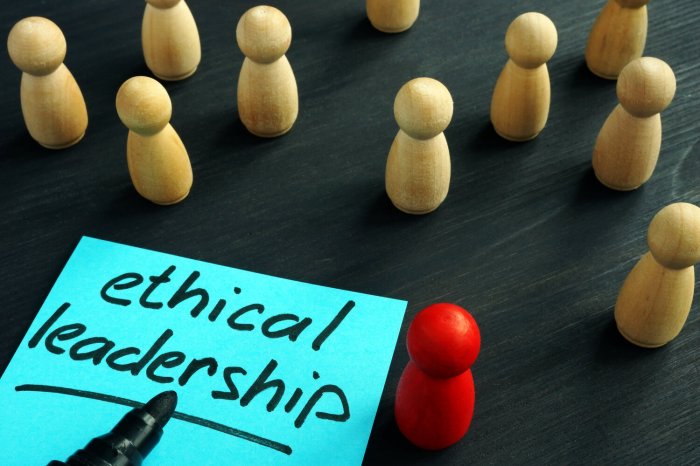
Ethical leadership is no longer a mere aspiration; it’s a critical component of sustainable business success. In today’s interconnected world, consumers, investors, and employees alike demand transparency and accountability from organizations. This guide delves into the multifaceted nature of ethical leadership, exploring its definition, impact on business development, and its crucial role in navigating complex ethical dilemmas.
We’ll examine how ethical leadership fosters a positive work environment, attracts and retains top talent, and enhances brand reputation. Furthermore, we’ll explore the integration of ethical considerations into business strategy, financing, and various business models. Ultimately, we aim to illuminate the path toward building businesses that are not only profitable but also responsible and ethically sound.
Defining Ethical Leadership in Business
Ethical leadership in business goes beyond simply achieving organizational goals; it’s about achieving them while upholding the highest moral standards. It’s a leadership approach that prioritizes integrity, fairness, and responsibility in all business decisions and actions. This contrasts sharply with traditional leadership models that may prioritize profit maximization above all else, sometimes at the expense of ethical considerations.Ethical leadership integrates moral principles into the very fabric of business operations, influencing not only the leader’s behavior but also the organizational culture.
It fosters a climate of trust, transparency, and accountability, leading to increased employee engagement, stronger stakeholder relationships, and ultimately, sustainable business success.
Core Principles and Values of Ethical Leadership
The foundation of ethical leadership rests on a set of core principles and values. These principles guide decision-making and shape the leader’s interactions with employees, customers, and other stakeholders. They ensure consistent ethical conduct, regardless of the pressures faced. These values are not abstract ideals but practical guides for navigating complex business situations. For example, a commitment to fairness ensures equitable treatment of all employees, while a focus on transparency promotes open communication and accountability.
Similarly, responsibility involves acknowledging and addressing the impact of business decisions on all stakeholders.
Characteristics and Attributes of an Ethical Leader
Ethical leaders exhibit a distinct set of characteristics that differentiate them from their less ethical counterparts. They possess a strong moral compass, consistently demonstrating integrity and honesty in their actions. They actively listen to and value the perspectives of others, fostering a collaborative and inclusive work environment. Furthermore, ethical leaders are decisive, taking responsibility for their actions and decisions, and readily admitting mistakes.
They also lead by example, modeling the ethical behavior they expect from their teams. This creates a culture of accountability and reinforces ethical norms within the organization.
Comparison of Ethical and Unethical Leadership Practices
Ethical and unethical leadership practices represent opposing approaches to business management. Ethical leadership prioritizes long-term value creation, considering the interests of all stakeholders. This contrasts with unethical leadership, which often focuses on short-term gains, disregarding ethical implications and potentially harming stakeholders. For example, an ethical leader might prioritize fair wages and safe working conditions for employees, even if it reduces short-term profits.
In contrast, an unethical leader might exploit workers by paying substandard wages or ignoring safety regulations to boost profitability. Another example is the difference in handling a product recall. An ethical leader would immediately initiate a comprehensive recall, even if it means significant financial losses, to prioritize customer safety. An unethical leader might attempt to cover up the defect or delay the recall to minimize immediate financial impact, potentially causing harm to customers.
This stark contrast highlights the significant difference in values and outcomes between ethical and unethical leadership.
The Role of Ethical Leadership in Business Development
Ethical leadership isn’t merely a moral imperative; it’s a powerful catalyst for sustainable business growth. A commitment to ethical practices permeates every aspect of a company, influencing its ability to attract talent, foster a positive work environment, and build strong customer relationships, ultimately leading to increased profitability and long-term success. This section explores the multifaceted role ethical leadership plays in driving business development.
Ethical Leadership and Talent Acquisition and Retention
Ethical leadership significantly impacts a company’s ability to attract and retain top talent. Individuals, particularly in today’s competitive job market, are increasingly seeking employment with organizations that align with their values. A strong ethical reputation attracts candidates who prioritize integrity and social responsibility, leading to a higher quality applicant pool. Furthermore, ethical workplaces foster a sense of trust and respect, enhancing employee engagement and reducing turnover.
Employees who feel valued and treated fairly are more likely to remain loyal to the company, reducing recruitment costs and maintaining institutional knowledge. This translates directly into a more stable and productive workforce.
Ethical Leadership and Positive Work Environment
An ethical leadership style cultivates a positive and productive work environment. When leaders consistently demonstrate integrity, fairness, and transparency, it fosters a culture of trust and respect among employees. This positive atmosphere reduces workplace conflict, increases collaboration, and improves overall morale. Employees feel empowered to voice their concerns and contribute their ideas without fear of reprisal, leading to increased innovation and creativity.
A supportive and inclusive work environment also boosts employee well-being, resulting in higher productivity and lower absenteeism. The resulting increase in employee satisfaction and engagement directly contributes to improved business outcomes.
Ethical Leadership and Customer Loyalty and Brand Reputation
Ethical leadership is intrinsically linked to improved customer loyalty and a stronger brand reputation. Consumers are increasingly conscious of corporate social responsibility and are more likely to support businesses that demonstrate ethical behavior. When a company is known for its integrity and commitment to fair practices, it builds trust with its customers, fostering loyalty and positive word-of-mouth marketing.
Conversely, unethical practices can severely damage a company’s reputation, leading to boycotts, negative publicity, and ultimately, financial losses. Maintaining ethical standards is therefore crucial for long-term customer relationships and sustainable business growth. A strong ethical reputation translates to increased brand value and a competitive advantage in the marketplace.
Case Study: Patagonia’s Commitment to Environmental Sustainability
Patagonia, an outdoor clothing company, exemplifies the positive impact of ethical leadership on business development. Their commitment to environmental sustainability, a core tenet of their business philosophy, has resonated deeply with consumers. Their ethical sourcing practices, commitment to fair labor standards, and support for environmental conservation initiatives have not only fostered strong customer loyalty but have also attracted top talent who share their values.
This commitment to ethical practices has contributed significantly to Patagonia’s success, building a strong brand reputation and fostering a highly engaged and motivated workforce. Their business model demonstrates that ethical leadership can be a powerful driver of both financial success and positive social impact. Patagonia’s consistent dedication to its values has solidified its position as a leader in the outdoor apparel industry, attracting customers and employees who value sustainability and ethical business practices.
Ethical Leadership and Business Ethics
Ethical leadership and business ethics are intrinsically linked. A strong ethical framework isn’t merely a set of rules; it’s a reflection of the leadership’s values and commitment to integrity, shaping the entire organizational culture and influencing decision-making at all levels. Without ethical leadership, even the most meticulously crafted code of conduct can remain ineffective.
Key Ethical Dilemmas and Their Address by Ethical Leadership
Businesses today grapple with a complex web of ethical challenges. Data privacy concerns, particularly with the rise of big data and AI, demand careful consideration. Sustainability issues, including environmental impact and resource depletion, are increasingly scrutinized by consumers and regulators. Supply chain ethics, ensuring fair labor practices and environmental responsibility throughout the production process, present another significant dilemma.
Furthermore, issues of diversity, equity, and inclusion are crucial for creating a just and productive workplace. Ethical leadership actively addresses these dilemmas by establishing clear ethical guidelines, fostering open communication, and promoting a culture of accountability. Leaders who model ethical behavior and prioritize transparency build trust, enabling the organization to navigate these challenges more effectively and proactively mitigate potential risks.
For example, a company prioritizing data privacy might invest heavily in robust security measures and transparent data handling policies, guided by the ethical leadership’s commitment to user trust.
Best Practices for Implementing and Maintaining a Strong Ethical Code of Conduct
Implementing and maintaining a robust ethical code of conduct requires a multi-faceted approach. Firstly, the code must be clearly defined, easily accessible, and regularly reviewed to ensure it remains relevant and addresses emerging ethical challenges. Secondly, effective training programs are crucial to educate employees on the code’s provisions and their implications. Thirdly, a robust reporting mechanism, including confidential channels for reporting ethical violations, must be established.
Furthermore, consistent enforcement of the code, with clear consequences for violations, is essential. Finally, fostering a culture of open communication and feedback allows for continuous improvement and adaptation of the ethical framework. Companies like Patagonia, known for their commitment to sustainability, exemplify this approach with their transparent supply chains and active engagement in environmental advocacy, all driven by strong ethical leadership.
Ethical Leadership and Corporate Social Responsibility
Ethical leadership plays a pivotal role in promoting corporate social responsibility (CSR). CSR encompasses a company’s commitment to operate ethically and contribute positively to society and the environment. Ethical leaders integrate CSR principles into the core business strategy, viewing it not as an add-on but as an integral part of long-term success. This might involve investing in community development projects, reducing carbon emissions, or supporting ethical sourcing practices.
By prioritizing social and environmental responsibility, ethical leaders enhance their company’s reputation, attract and retain talent, and build stronger relationships with stakeholders. Companies like Unilever, with their sustainable living plan, demonstrate the positive impact of integrating CSR into the business strategy, driven by a strong ethical leadership that prioritizes long-term value creation over short-term gains.
Comparison of Ethical Frameworks in Business Decision-Making
The following table compares different ethical frameworks and their applications in business decision-making:
| Ethical Framework | Description | Application in Business | Example |
|---|---|---|---|
| Utilitarianism | Focuses on maximizing overall happiness and well-being. | Decisions are made based on the greatest good for the greatest number of people. | A company might choose to invest in a less profitable but environmentally friendly project because it benefits society as a whole. |
| Deontology | Emphasizes moral duties and rules, regardless of consequences. | Decisions are made based on adherence to ethical principles, even if it leads to less optimal outcomes. | A company might refuse to engage in price-fixing, even if it would increase profits, because it violates ethical rules. |
| Virtue Ethics | Focuses on developing moral character and virtues. | Decisions are made based on what a virtuous person would do in a similar situation. | A company leader might prioritize fairness and honesty in all business dealings, even when facing difficult choices. |
| Rights-Based Ethics | Emphasizes the inherent rights of individuals. | Decisions are made based on respecting the fundamental rights of all stakeholders. | A company might ensure fair wages and safe working conditions for its employees, respecting their basic human rights. |
Ethical Leadership and Business Coaching
Business coaching plays a vital role in cultivating ethical leadership within organizations. By providing individualized support and guidance, coaches help executives and managers develop the self-awareness, decision-making skills, and ethical frameworks necessary to navigate complex moral dilemmas and lead with integrity. This process extends beyond simple compliance; it fosters a culture of ethical behavior throughout the organization.
The Business Coach’s Role in Developing Ethical Leadership Skills
A business coach acts as a trusted advisor and facilitator, helping leaders identify their ethical blind spots and develop strategies for ethical decision-making. This involves exploring personal values, examining past experiences, and developing a robust ethical compass. Coaches utilize various techniques to challenge existing perspectives and promote critical thinking around ethical issues. They also help leaders translate ethical principles into concrete actions and behaviors within their daily roles.
For example, a coach might work with a leader struggling with a conflict of interest, guiding them through a process of identifying the conflict, exploring potential solutions, and choosing a course of action that aligns with both organizational values and personal integrity.
Coaching Techniques Promoting Ethical Decision-Making
Several coaching techniques effectively promote ethical decision-making. These include:
- Socratic Questioning: The coach uses open-ended questions to guide the leader towards self-discovery and a deeper understanding of their own ethical framework. This encourages critical reflection and helps leaders articulate their values and beliefs.
- Case Study Analysis: Presenting real-life ethical dilemmas allows leaders to practice their decision-making skills in a safe environment. This provides an opportunity to analyze various perspectives, consider the consequences of different actions, and develop a more nuanced understanding of ethical complexities.
- Role-Playing: Simulating challenging ethical situations helps leaders anticipate potential obstacles and practice their responses. This builds confidence and improves their ability to handle ethical conflicts effectively. For instance, role-playing a negotiation where ethical considerations are paramount allows the leader to refine their communication and negotiation strategies within an ethical framework.
- 360-Degree Feedback: Gathering feedback from multiple sources (peers, subordinates, superiors) provides a holistic view of the leader’s ethical behavior. This can highlight areas for improvement and increase self-awareness.
The Importance of Ongoing Ethical Development and Mentorship Programs
Ethical leadership is not a one-time achievement; it requires continuous development and reinforcement. Ongoing mentorship programs and regular ethical training sessions are crucial for maintaining a high ethical standard within an organization. Mentorship provides leaders with a trusted advisor who can offer guidance and support as they navigate ethical challenges. Regular training keeps ethical principles at the forefront of decision-making and helps leaders stay informed about changes in regulations and best practices.
For example, a company might implement a program pairing senior ethical leaders with rising managers to foster a culture of ethical leadership across generations.
Implementing an Ethical Leadership Development Program
A structured approach is essential for effectively implementing an ethical leadership development program. The following steps provide a framework:
- Assessment: Begin by assessing the current state of ethical leadership within the organization. This might involve surveys, interviews, and reviews of existing policies and procedures.
- Define Ethical Principles: Clearly articulate the organization’s core ethical values and principles. These should be concise, easily understood, and integrated into the company culture.
- Develop Training Modules: Create engaging and relevant training programs that address key ethical issues and provide practical guidance on ethical decision-making. This could include case studies, interactive exercises, and role-playing scenarios.
- Establish a Mentorship Program: Pair senior ethical leaders with junior employees to provide ongoing support and guidance. This fosters a culture of ethical leadership across all levels of the organization.
- Implement a Reporting Mechanism: Create a confidential system for reporting ethical violations. This ensures that unethical behavior is addressed promptly and effectively.
- Regular Evaluation: Continuously evaluate the program’s effectiveness and make adjustments as needed. This ensures that the program remains relevant and impactful.
Ethical Considerations in Business Financing
Securing funding for a business is a crucial step, but the process involves navigating a complex landscape of ethical considerations. Ethical business financing ensures fairness, transparency, and responsible use of funds, fostering trust and long-term sustainability. Ignoring these ethical aspects can lead to serious consequences, damaging both the borrower’s and lender’s reputations and potentially leading to legal repercussions.
Ethical Implications of Business Loans and Financing Options
Business loans and financing options, while essential for growth, present various ethical dilemmas. For instance, lenders must assess the borrower’s creditworthiness and repayment capacity responsibly, avoiding predatory lending practices that exploit vulnerable businesses. Similarly, borrowers have an ethical obligation to provide accurate financial information and use the funds for their intended purpose. Failure to do so can lead to financial distress for both parties and undermine the integrity of the financial system.
For example, a lender offering loans with excessively high interest rates to businesses with limited financial literacy could be considered unethical. Conversely, a borrower misrepresenting their financial situation to secure a loan is also ethically questionable.
Responsibilities of Lenders and Borrowers in Ensuring Ethical Financial Practices
Lenders bear the responsibility of acting with transparency and fairness. This includes clearly disclosing all loan terms and conditions, avoiding deceptive marketing practices, and ensuring that borrowers understand the implications of the loan agreement. They should also assess the potential risks associated with each loan application carefully and avoid extending credit to borrowers who are unlikely to repay.
Borrowers, on the other hand, are ethically obligated to provide accurate and complete financial information, use the funds responsibly, and maintain open communication with their lenders throughout the loan repayment process. They should also shop around for the best loan terms and avoid taking on more debt than they can reasonably manage. A responsible lender would thoroughly vet a loan application, ensuring the funds will be used appropriately.
A responsible borrower would meticulously track their finances and communicate promptly with the lender if they anticipate difficulty meeting their repayment obligations.
Potential Ethical Conflicts of Interest in Business Financing and Mitigation Strategies
Conflicts of interest can arise in business financing when a lender has a personal stake in the success or failure of a borrower. For example, a lender who is also a significant investor in the borrower’s company may be tempted to approve a loan even if the borrower’s financial prospects are questionable. Similarly, a borrower might be pressured to accept unfavorable loan terms from a lender with whom they have a pre-existing relationship.
To mitigate these conflicts, lenders should establish clear procedures for loan approvals, involving multiple individuals in the decision-making process. They should also disclose any potential conflicts of interest to the borrower. Borrowers should seek advice from independent financial advisors to ensure they are getting fair terms. Transparency and independent oversight are key to preventing and addressing conflicts of interest.
Ethical Guidelines for Securing and Managing Business Loans
The ethical acquisition and management of business loans necessitate a robust framework. Before seeking financing, businesses should thoroughly assess their financial needs and develop a realistic repayment plan. They should also shop around for the best loan terms and compare offers from multiple lenders. During the application process, it’s crucial to provide accurate and complete financial information.
Throughout the loan repayment period, maintaining open communication with the lender and promptly addressing any potential repayment issues is paramount. Failure to do so could result in penalties and damage the business’s creditworthiness. Furthermore, adhering to all contractual obligations and using the loan proceeds for their intended purpose demonstrates ethical business conduct. A commitment to transparency and responsible financial management is fundamental.
Ethical Leadership and Business Models
The business model a company adopts significantly influences its ethical performance. Different models prioritize various aspects, leading to diverse ethical implications. Understanding these connections is crucial for ethical leadership, enabling the development of sustainable and responsible business practices.The choice of business model directly impacts a company’s ethical considerations. For example, a model focused solely on profit maximization might neglect environmental sustainability or fair labor practices.
Conversely, a model prioritizing social impact might face challenges in achieving financial viability. This section explores these dynamics and Artikels strategies for designing ethically sound and sustainable business models.
Impact of Different Business Models on Ethical Considerations
Various business models present unique ethical challenges. A traditional for-profit model, focused solely on shareholder value, can incentivize cost-cutting measures that compromise worker safety or environmental protection. Conversely, a social enterprise, committed to both profit and social good, faces the challenge of balancing these often-competing goals. A cooperative model, owned and operated by its members, might prioritize member needs over maximizing profits, potentially limiting growth or innovation.
Each model demands a unique ethical framework and leadership approach.
Comparison of Profit Maximization and Social Impact Strategies
Profit maximization, a common business strategy, often prioritizes financial returns above all else. This approach can lead to ethical dilemmas, such as exploiting cheap labor, neglecting environmental concerns, or engaging in aggressive marketing tactics. In contrast, social impact strategies prioritize positive social and environmental outcomes alongside profit. This approach might involve investing in sustainable practices, promoting fair trade, or supporting community development initiatives.
While both strategies have their place, ethical leadership requires careful consideration of their potential trade-offs and the need for a balanced approach. For example, Patagonia, known for its commitment to environmental sustainability, demonstrates that a focus on social impact can be financially successful. Conversely, some companies that prioritize profit maximization have faced significant reputational damage due to unethical practices.
Designing an Ethical and Sustainable Business Model
Designing an ethical and sustainable business model requires a holistic approach. This involves defining clear ethical principles, integrating them into all aspects of the business, and establishing mechanisms for accountability and transparency. Key elements include: a commitment to fair labor practices, environmental sustainability, responsible sourcing, ethical marketing, and robust corporate governance. The business model should also incorporate mechanisms for measuring and reporting on its social and environmental impact.
A circular economy model, for instance, prioritizes resource efficiency and waste reduction, minimizing environmental impact while potentially creating new revenue streams. This approach directly addresses ethical concerns related to resource depletion and pollution.
Integrating Ethical Considerations into Strategic Planning
Ethical considerations should be integrated into every stage of a company’s strategic planning process. This begins with defining the company’s purpose and values, which should explicitly address ethical principles. Subsequently, ethical considerations should be factored into all decision-making processes, from product development and marketing to supply chain management and human resources. Regular ethical audits and risk assessments can help identify and mitigate potential ethical issues.
Furthermore, incorporating stakeholder engagement into the planning process ensures that the company considers the ethical implications of its actions on all affected parties. This proactive approach not only reduces ethical risks but also enhances the company’s reputation and strengthens its relationships with stakeholders.
Ethical Leadership and Business Strategy
Ethical leadership is not merely a desirable trait; it’s a critical component of a successful and sustainable business strategy. A strong ethical foundation fosters trust, improves reputation, and ultimately drives long-term profitability. Integrating ethical considerations into strategic planning ensures alignment between business goals and societal values, leading to more resilient and responsible business practices.Ethical leadership profoundly influences the development and implementation of successful business strategies.
Leaders who prioritize ethical conduct create a culture of integrity, transparency, and accountability. This, in turn, allows for more effective decision-making, stronger stakeholder relationships, and a more engaged workforce. A commitment to ethical practices enhances the company’s reputation, attracting investors, customers, and top talent. Conversely, unethical practices can lead to significant financial losses, legal repercussions, and irreparable damage to a company’s image.
Ethical Considerations Integrated into Long-Term Strategic Goals
Many companies have successfully integrated ethical considerations into their long-term strategic goals. Patagonia, for example, has built its brand around environmental sustainability, incorporating ethical sourcing and fair labor practices into its supply chain. This commitment resonates deeply with its target market, enhancing brand loyalty and driving sales. Similarly, Unilever’s Sustainable Living Plan aims to reduce its environmental footprint while improving the livelihoods of millions.
This strategy not only addresses ethical concerns but also contributes to the company’s long-term growth and profitability by attracting environmentally conscious consumers. These examples demonstrate that ethical practices are not mutually exclusive with business success; rather, they can be powerful drivers of growth and competitive advantage.
Risks and Benefits of Prioritizing Ethics in Business Strategy
Prioritizing ethics in business strategy presents both risks and benefits. A potential risk is the short-term cost of implementing ethical practices, such as investing in sustainable materials or fair wages. However, these costs are often outweighed by the long-term benefits, including improved brand reputation, increased customer loyalty, and reduced legal and regulatory risks. The potential benefits include enhanced brand reputation, increased employee engagement and productivity, attracting and retaining top talent, and improved investor relations.
Conversely, neglecting ethical considerations can lead to reputational damage, boycotts, lawsuits, and ultimately, business failure. The Enron scandal serves as a stark reminder of the devastating consequences of prioritizing short-term profits over ethical conduct.
Key Elements of an Ethical Business Strategy
An ethical business strategy requires a multifaceted approach. It necessitates a clear articulation of ethical values, integrated into all aspects of the business, from supply chain management to marketing and sales. This includes establishing clear ethical guidelines and codes of conduct, implementing robust compliance programs, and providing ethics training for all employees. Regular ethical audits and assessments are crucial to identify and address potential risks and ensure that ethical practices are consistently followed.
Furthermore, transparent communication with stakeholders is essential to build trust and accountability. A commitment to continuous improvement and a willingness to adapt to evolving ethical standards are also vital for maintaining a strong ethical foundation. Finally, fostering a culture of ethical leadership is paramount, empowering employees to raise concerns and report unethical behavior without fear of retaliation.
Ethical Considerations in Business Travel
Business travel, while essential for many organizations, presents unique ethical challenges. The potential for misuse of company funds, conflicts of interest, and a blurring of personal and professional boundaries necessitates a robust ethical framework to guide employee behavior and ensure responsible spending. This section will explore these challenges and Artikel best practices for ethical and transparent business travel.Potential Ethical Challenges Related to Business Travel and Expense ReportsBusiness travel expenses can be susceptible to abuse.
Inflated claims, fictitious expenses, and the personal use of company resources are common ethical pitfalls. For instance, claiming personal expenses as business expenses, such as personal shopping or meals with family, is a clear breach of ethical conduct. Similarly, choosing more expensive travel options than necessary without justification, or extending trips unnecessarily for personal reasons, represents a misuse of company funds.
Furthermore, conflicts of interest can arise when choosing hotels or vendors with personal connections, potentially compromising objectivity and potentially violating company policy. Lack of clear expense reporting guidelines and insufficient oversight can exacerbate these issues.Best Practices for Ensuring Ethical and Responsible Business TravelImplementing clear and comprehensive travel policies is paramount. These policies should Artikel acceptable expenses, travel class restrictions (e.g., economy class unless justified), and procedures for obtaining pre-approval for non-standard requests.
Regular training sessions for employees on ethical travel guidelines and expense reporting procedures are also crucial. The use of company-approved travel booking tools and expense management software can streamline processes and improve transparency. Emphasis should be placed on choosing cost-effective options without compromising safety or efficiency. Employees should be encouraged to seek clarification on any unclear aspects of the policy and to always err on the side of caution when in doubt.Transparency and Accountability in Business Travel ExpensesTransparency and accountability are vital in maintaining ethical business travel practices.
This involves establishing clear expense reporting deadlines and requiring detailed receipts for all claimed expenses. Regular audits of expense reports can help identify potential irregularities. Furthermore, a system of internal checks and balances should be in place, where expenses are reviewed by a supervisor or designated personnel before reimbursement. The use of expense reporting software with built-in controls can further enhance accountability.
A culture of open communication and a clear reporting mechanism for concerns are essential to ensure employees feel comfortable reporting potential ethical violations.Examples of Policies and Procedures that Promote Ethical Business TravelA robust ethical travel policy might include stipulations such as: a maximum per diem allowance for meals and incidentals; a requirement for pre-approval for all business class travel or stays in luxury hotels; a clear definition of acceptable business-related expenses; a policy prohibiting the use of company credit cards for personal expenses; a detailed expense reporting template with clear instructions; and a process for reporting suspected ethical violations.
Furthermore, regular communication of these policies through company newsletters, intranet postings, and training sessions is essential to ensure all employees are aware of their responsibilities. Finally, a transparent and accessible mechanism for employees to voice concerns or seek clarification is crucial for fostering a culture of ethical conduct.
Cultivating ethical leadership is an ongoing journey, requiring continuous learning, self-reflection, and a commitment to integrity. By understanding the core principles and practical applications of ethical leadership, businesses can build a strong foundation for long-term success, fostering trust, loyalty, and a positive impact on society. The journey towards ethical leadership is not just about compliance; it’s about creating a culture of responsibility and building a better future.
FAQ Guide
What are some common signs of unethical leadership?
Signs include a lack of transparency, consistent disregard for rules and regulations, favoritism, bullying, and a culture of fear or silence.
How can I improve my own ethical leadership skills?
Seek mentorship, participate in ethical leadership training, reflect on your decisions, actively listen to feedback, and prioritize ethical considerations in all your actions.
How can ethical leadership improve employee morale?
Ethical leaders foster trust and respect, leading to increased job satisfaction, reduced stress, and improved team collaboration. Employees feel valued and empowered when they work for a company with strong ethical values.
What is the role of whistleblowing in ethical leadership?
Whistleblowing, while potentially risky, is a vital mechanism for exposing unethical behavior. Ethical leaders create safe channels for reporting concerns and protect whistleblowers from retaliation.