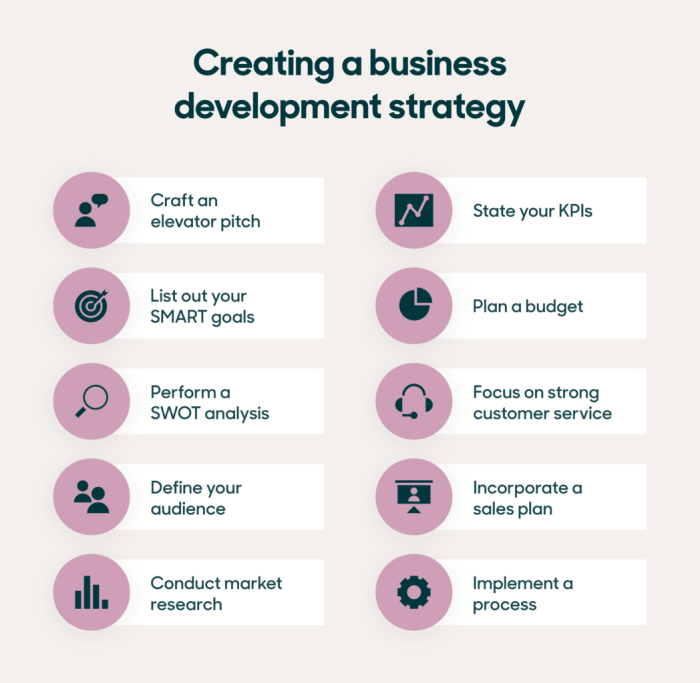
In today’s dynamic business landscape, managers require a diverse skillset to drive growth and success. This guide delves into the essential business development skills crucial for navigating complex market challenges, fostering strategic partnerships, and ultimately achieving organizational objectives. We will explore core competencies, strategic planning, effective networking, and negotiation techniques, all within the context of ethical considerations and robust business strategies.
From understanding market analysis to mastering the art of negotiation, this exploration will equip managers with the tools to not only survive but thrive in the competitive business world. We’ll examine the differences between approaches in startups versus established corporations, highlighting adaptable strategies for various organizational structures and goals. The importance of ethical considerations and long-term relationship building will also be emphasized, demonstrating how responsible business practices contribute to sustainable growth.
Core Business Development Skills for Managers
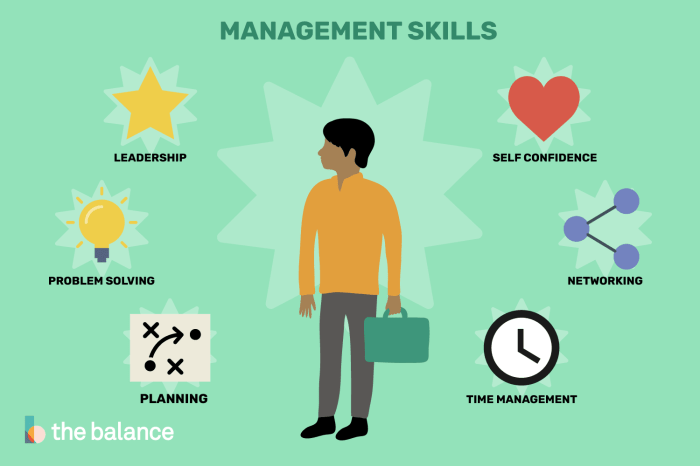
Effective business development is crucial for managerial success in today’s dynamic market. Managers who possess strong business development skills drive growth, enhance profitability, and ensure the long-term sustainability of their organizations. This section Artikels five essential skills, explores their impact, and details a training program to enhance them.
Top Five Essential Business Development Skills for Managers
These five skills represent the core competencies needed for managers to excel in business development. Mastering them leads to significant improvements in revenue generation, market share, and overall organizational performance.
- Strategic Thinking and Planning: This involves formulating clear, actionable business development strategies aligned with overall organizational goals. For example, a manager might develop a strategic plan to penetrate a new market segment by identifying target customers, analyzing competitor activities, and designing a targeted marketing campaign. The tangible result is increased market share and revenue growth within the new segment.
- Market Analysis and Research: Thorough market analysis is fundamental. Managers must understand market trends, customer needs, and competitive landscapes. A manager, for instance, might conduct market research to identify unmet customer needs, leading to the development of a new product or service that addresses these needs and generates substantial revenue.
- Relationship Building and Networking: Strong interpersonal skills are vital for building and maintaining relationships with clients, partners, and stakeholders. A manager adept at networking might secure a strategic partnership that opens up new markets and distribution channels, resulting in significant sales increases.
- Sales and Negotiation: Managers must be skilled at closing deals and negotiating favorable terms. For example, a manager who skillfully negotiates a contract with a key supplier might secure better pricing, leading to improved profit margins.
- Financial Acumen: Understanding financial statements, budgeting, and forecasting is essential for making sound business decisions. A manager with strong financial acumen can accurately assess the financial viability of a business development initiative, reducing the risk of costly failures and maximizing return on investment.
Training Program for Enhancing Business Development Skills
A comprehensive training program should incorporate both theoretical learning and practical application.
The program will be structured across three modules:
- Module 1: Foundations of Business DevelopmentThis module covers the theoretical aspects of business development, including strategic planning, market analysis, and financial management. Exercises will include case studies analyzing successful business development initiatives and developing strategic plans for hypothetical scenarios.
- Module 2: Practical Application and Skill DevelopmentThis module focuses on developing practical skills through role-playing exercises, simulations, and workshops. Participants will practice negotiation techniques, relationship-building strategies, and sales presentations. Assessments will include presentations and simulated business negotiations.
- Module 3: Advanced Business Development StrategiesThis module delves into more advanced topics such as international business development, digital marketing strategies, and innovation management. Participants will develop and present a comprehensive business development plan for a chosen market or product.
Business Development Skills: Startup vs. Established Corporation
The business development skills needed vary significantly between startups and established corporations.
Startups prioritize rapid growth and market penetration. Their focus is on securing seed funding, building a Minimum Viable Product (MVP), and achieving initial traction. Relationship building and securing early adopters are crucial. Established corporations, on the other hand, focus on optimizing existing operations, expanding into new markets, and diversifying revenue streams. They prioritize strategic planning, market analysis, and efficient resource allocation.
In startups, agility and adaptability are paramount, while established corporations often require a more structured and methodical approach. Startups may rely heavily on networking and personal relationships to secure funding and partnerships, whereas established corporations may utilize more formal channels and processes.
Strategic Planning & Market Analysis for Business Development
Strategic planning and market analysis are crucial for successful business development. A well-defined strategy, informed by robust market research, allows businesses to identify opportunities, allocate resources effectively, and navigate potential challenges. This section details the process of conducting a thorough market analysis and developing a strategic plan for market expansion.
Conducting a Thorough Market Analysis
A comprehensive market analysis provides the foundation for informed business decisions. This involves systematically gathering, analyzing, and interpreting data to understand market trends, customer behavior, and competitive landscapes. A step-by-step approach ensures a thorough and efficient process.
- Define the Scope: Clearly articulate the target market, including demographics, geographic location, and specific needs. This establishes the boundaries of the analysis.
- Gather Data: Employ various methods for data collection. Secondary research utilizes existing data sources like market reports, industry publications, and government statistics. Primary research involves direct interaction with the target market through surveys, interviews, and focus groups.
- Analyze Data: Organize and analyze the collected data to identify key trends, patterns, and insights. Tools like statistical software can assist in this process. Pay close attention to market size, growth rate, customer segmentation, and competitive dynamics.
- Identify Opportunities: Based on the analysis, identify potential opportunities for new products, services, or market segments. This may involve identifying unmet needs, underserved niches, or gaps in the existing market.
- Validate Findings: Before making significant decisions, validate the findings through additional research or pilot programs. This helps reduce risks and ensure the accuracy of the analysis.
Developing a Sample Strategic Plan for Market Expansion
Let’s consider a hypothetical company, “InnovateTech,” specializing in software solutions for small businesses. They aim to expand into the healthcare sector. The following table Artikels a sample strategic plan:
| Market | Strategy | Timeline | Budget |
|---|---|---|---|
| Healthcare providers (small clinics, dental practices) | Develop specialized software for appointment scheduling, patient records, and billing. Target marketing through industry conferences and online advertising. | Year 1: Product development and initial marketing. Year 2: Expansion to new regions. | Year 1: $500,
000. Year 2 $750,000. |
Forecasting and Risk Assessment in Strategic Planning
Accurate forecasting and risk assessment are critical components of a successful strategic plan. Forecasting involves predicting future market trends, sales, and expenses. Risk assessment identifies potential challenges and develops mitigation strategies.Examples of potential risks include:
- Competitive pressures: Existing competitors may aggressively respond to market entry.
- Regulatory hurdles: Healthcare regulations can be complex and require significant compliance efforts.
- Economic downturns: Economic instability can reduce demand for new software solutions.
- Technological disruptions: Rapid technological advancements can render existing products obsolete.
Mitigation strategies may include:
- Competitive analysis: Monitor competitors’ activities and develop strategies to differentiate the product or service.
- Regulatory compliance: Invest in legal expertise to ensure compliance with all relevant regulations.
- Financial planning: Develop robust financial models to withstand economic fluctuations.
- Continuous innovation: Invest in research and development to stay ahead of technological advancements.
Networking and Relationship Building for Business Development
Effective networking is paramount for business development. It’s not simply about collecting business cards; it’s about cultivating genuine relationships that lead to mutually beneficial partnerships and increased business opportunities. Building a strong network requires a strategic approach, focusing on quality over quantity and prioritizing long-term relationship cultivation.Successful networking involves understanding the needs and interests of others, offering value in return, and consistently maintaining contact.
This approach fosters trust and credibility, ultimately leading to increased opportunities for collaboration and growth. Managers should view networking as an ongoing process, requiring consistent effort and strategic engagement.
Effective Networking Strategies for Managers
Building strong relationships requires a proactive and strategic approach. Managers should focus on identifying key individuals and organizations that align with their business goals. This involves attending industry events, joining relevant professional organizations, and utilizing online platforms to connect with potential clients, partners, and industry leaders. The key is to approach networking with a genuine interest in building relationships rather than simply seeking immediate sales opportunities.
Successful networking is a long-term investment in building a strong professional network.
Best Practices for Maintaining Professional Relationships and Nurturing Long-Term Partnerships
Maintaining strong professional relationships requires consistent effort and thoughtful engagement. Building trust and mutual respect is crucial for fostering long-term partnerships.
- Regular Communication: Maintain consistent contact with key individuals through emails, phone calls, or brief personal notes. This keeps your relationship top-of-mind.
- Value-Added Interactions: Don’t just ask for things; provide value to your contacts by sharing relevant information, offering assistance, or introducing them to other valuable connections.
- Personalized Communication: Avoid generic emails and messages. Personalize your communication to show genuine interest in the individual and their business.
- Follow Up: After meetings or conversations, send a follow-up email to reiterate key points and express gratitude for their time.
- Reciprocity: Be willing to offer help and support to your contacts, even if it doesn’t directly benefit you in the short term. This fosters goodwill and builds stronger relationships.
- Celebrate Successes: Acknowledge and celebrate the successes of your contacts. This shows you are invested in their well-being and strengthens the bond between you.
Leveraging Networking Events and Online Platforms to Generate Leads and Expand Business Reach
Networking events and online platforms provide valuable opportunities to connect with potential clients and partners. However, simply attending an event or joining a platform isn’t enough. A strategic approach is necessary to maximize the benefits of these platforms.For example, at industry conferences, actively participate in discussions, ask insightful questions, and engage with speakers and attendees. Don’t just stand in the corner; actively seek opportunities to connect with others.
Online, actively engage in relevant online communities, share valuable content, and participate in discussions to establish yourself as a thought leader in your industry. LinkedIn is a powerful tool for networking; create a professional profile and actively engage with posts and groups related to your industry. For instance, participating in LinkedIn groups relevant to your industry allows you to share expertise, answer questions, and build relationships with potential clients and partners.
Following industry leaders and engaging with their content also enhances visibility and builds credibility.
Sales and Negotiation Skills in Business Development
Effective sales and negotiation are crucial for successful business development. A manager proficient in these areas can significantly increase the likelihood of securing profitable deals and building strong, long-term client relationships. This section will explore key negotiation techniques and sales approaches, providing practical examples to illustrate their application.
Five Key Negotiation Techniques
Mastering negotiation is vital for securing favorable business deals. The following techniques empower managers to achieve mutually beneficial outcomes while protecting their organization’s interests.
- Preparation and Planning: Thorough research into the counterparty, their needs, and the market landscape is paramount. Understanding their priorities allows for a more targeted and effective negotiation strategy. This includes defining your own bottom line and walk-away point.
- Active Listening and Empathy: Truly understanding the other party’s perspective is key. Active listening allows for the identification of underlying needs and concerns, facilitating the creation of solutions that address these points. Demonstrating empathy builds trust and rapport.
- Value Creation and Problem-Solving: Negotiation is not a zero-sum game. Focusing on creating value for both parties leads to more sustainable and mutually beneficial outcomes. This involves identifying common ground and collaboratively solving problems.
- Strategic Concession Making: Concessions should be strategic, not arbitrary. They should be made in exchange for something of equal or greater value. A well-timed concession can demonstrate goodwill and encourage reciprocation.
- Building Rapport and Trust: A strong, trusting relationship with the other party can significantly improve the negotiation process. Building rapport involves demonstrating professionalism, respect, and a genuine interest in their needs.
Negotiation Role-Playing Scenario
Imagine a manager, Sarah, negotiating a contract with a potential client, Acme Corp., for a new software implementation. Acme Corp. initially offers a significantly lower price than Sarah’s team projected.Sarah, prepared with market research and Acme Corp.’s financial data, actively listens to their concerns about budget constraints. She then reframes the proposal, highlighting the long-term cost savings and increased efficiency the software offers.
She proposes a phased implementation to ease the initial financial burden, offering a lower price for the first phase with a clear Artikel of the subsequent phases and their costs. This addresses Acme Corp.’s budget concerns while securing a long-term contract. Through active listening, value creation (emphasizing long-term ROI), and strategic concession making (phased implementation), Sarah secures a mutually beneficial agreement.
Comparison of Sales Approaches
Different sales approaches yield varying degrees of effectiveness depending on the business context and client needs. The table below compares consultative selling and solution selling.
| Feature | Consultative Selling | Solution Selling | Best Suited For |
|---|---|---|---|
| Focus | Understanding client needs and providing tailored advice. | Identifying and solving client problems with a specific product or service. | |
| Approach | Questions-driven, collaborative, relationship-focused. | Problem-focused, solution-oriented, results-driven. | |
| Sales Cycle | Longer, more complex sales cycle. | Potentially shorter sales cycle, depending on complexity. | |
| Best Suited For | Complex, high-value sales, requiring significant client consultation. (e.g., enterprise software implementation) | Situations where a clear problem exists and a specific solution is readily available. (e.g., selling a specific software to address a known data management issue) | Complex, high-value sales; Situations with a clear problem and a readily available solution |
Business Development and Related Concepts
Business development, while focused on growth and profitability, is inextricably linked to ethical considerations. A strong ethical foundation is crucial for long-term success and building a positive reputation. Understanding the interplay between business development strategies and ethical principles is vital for responsible and sustainable growth.
Business Development and Business Ethics
Ethical dilemmas frequently arise in business development. For example, a company might face pressure to compromise on product quality to meet aggressive sales targets or encounter situations involving bribery or unfair competition. Navigating these requires a strong ethical compass, a well-defined code of conduct, and a commitment to transparency. A robust ethical framework involves establishing clear guidelines, providing ethics training to employees, and creating a culture of accountability where ethical concerns can be raised without fear of reprisal.
Addressing these dilemmas proactively, through open communication and a commitment to fairness, strengthens the company’s reputation and fosters trust with stakeholders. For instance, a company might choose to forgo a potentially lucrative deal if it involves compromising on environmental sustainability, prioritizing long-term ethical considerations over short-term gains.
Business Coaching versus Business Development
Business coaching and business development, while both aimed at improving business performance, differ in their approach and goals. Business coaching focuses on individual or team development, providing guidance and support to enhance skills and performance. Business development, on the other hand, encompasses a broader range of activities aimed at expanding the business, such as market analysis, strategic planning, and new product development.
While a business coach might help a sales team improve their closing rate, a business development manager would focus on identifying new market opportunities and developing strategies to penetrate those markets. The two can be complementary; a business coach might help a business development team improve their communication and collaboration skills, thereby enhancing their effectiveness.
Business Loans and Business Development Initiatives
Business loans play a significant role in fueling business development initiatives. Several loan types cater to various needs. Small Business Administration (SBA) loans offer government-backed financing with favorable terms, often suitable for startups and small businesses. Term loans provide a fixed amount of money repaid over a specific period, useful for purchasing equipment or expanding facilities. Lines of credit offer flexible access to funds as needed, beneficial for managing cash flow fluctuations.
Equipment financing allows businesses to acquire equipment with the equipment itself serving as collateral. The choice of loan depends on factors such as the business’s financial health, the purpose of the loan, and the repayment capacity. A well-structured loan can provide the necessary capital for marketing campaigns, research and development, or hiring key personnel, directly contributing to business growth.
Business Model Canvas for a New Product/Service
A business model canvas provides a visual representation of a business’s key components. Consider a new subscription-based meal kit delivery service. The Value Proposition would be convenient, healthy, and delicious home-cooked meals delivered weekly. Customer Segments would include busy professionals and families. Channels would involve online marketing and social media.
Customer Relationships would be built through personalized emails and customer service. Revenue Streams would be subscription fees. Key Activities would include meal planning, sourcing ingredients, and delivery logistics. Key Resources would include a reliable supply chain and a user-friendly website. Key Partnerships would involve local farmers and delivery services.
Cost Structure would encompass ingredient costs, packaging, delivery fees, and marketing expenses. This visual framework helps to ensure all aspects of the business are aligned and working towards a common goal.
The Importance of a Robust Business Strategy
A well-defined business strategy is paramount for driving business development success. It provides a roadmap for achieving specific goals, allocating resources effectively, and navigating market challenges. Consider Apple’s success, driven by a focus on innovative design and seamless user experience. Conversely, companies failing to adapt to changing market conditions or neglecting customer feedback often struggle. Kodak’s failure to embrace digital photography serves as a cautionary tale.
A robust strategy incorporates market research, competitive analysis, clear objectives, and a well-defined implementation plan. It should be adaptable and reviewed regularly to account for changing circumstances.
Business Travel and Business Development
Business travel plays a crucial role in fostering business development and building relationships. Face-to-face interactions are often more effective than virtual communication for building trust and rapport with clients and partners. Effective planning involves setting clear objectives, choosing appropriate destinations, and scheduling meetings strategically. Thorough research of the destination, including cultural nuances and logistical considerations, is essential.
Efficient execution includes maximizing meeting time, building rapport, and following up effectively after the trip. For example, a sales manager might travel to meet with a key client to present a new product, building a stronger relationship and securing a significant deal.
Mastering business development skills is no longer a luxury but a necessity for managers aiming to lead their teams to success. This comprehensive overview has highlighted the core competencies, strategic approaches, and ethical considerations vital for driving sustainable growth. By understanding market dynamics, building strong relationships, and negotiating effectively, managers can unlock new opportunities and achieve ambitious organizational goals.
Continuous learning and adaptation are key to remaining competitive, ensuring long-term success in the ever-evolving business world.
FAQ Section
What is the difference between business development and sales?
Business development focuses on long-term strategic growth, identifying new opportunities, and building relationships. Sales focuses on closing deals and generating immediate revenue. Business development often lays the groundwork for sales success.
How can I improve my networking skills?
Actively participate in industry events, join relevant professional organizations, and utilize online platforms like LinkedIn to connect with potential partners and clients. Focus on building genuine relationships rather than just collecting contacts.
What are some common ethical dilemmas in business development?
Examples include conflicts of interest, bribery, misleading marketing claims, and data privacy violations. Maintaining transparency, adhering to legal regulations, and prioritizing ethical conduct are crucial.
How important is market analysis in business development?
Market analysis is crucial for identifying opportunities, understanding customer needs, and assessing competitive landscapes. It informs strategic decision-making and helps mitigate risks.