
Navigating the complexities of the business world can feel overwhelming, especially for small business owners. Strategic planning, however, offers a roadmap to success, transforming ambitious goals into tangible achievements. This guide delves into the essential elements of crafting a robust strategic plan, empowering small businesses to thrive in today’s competitive landscape. It’s about more than just a plan; it’s about building a sustainable future.
From defining your business’s unique strengths and weaknesses through a comprehensive SWOT analysis to setting SMART goals and securing the necessary resources, we’ll cover the crucial steps in creating a plan tailored to your specific industry and circumstances. We’ll explore various business models, ethical considerations, and funding options, equipping you with the knowledge to confidently navigate the challenges and opportunities ahead.
Business Model Innovation
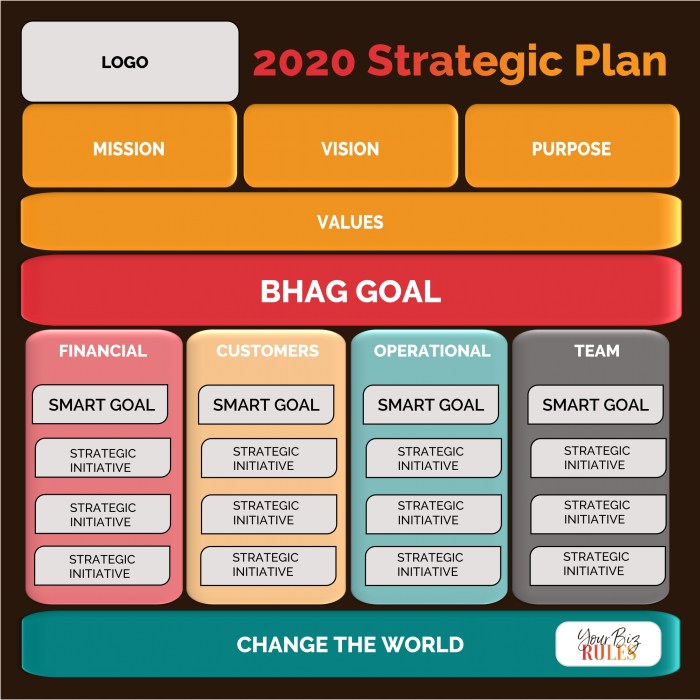
Adapting and innovating your business model is crucial for small businesses to thrive in today’s dynamic market. A well-designed business model acts as a roadmap, outlining how your company creates, delivers, and captures value. Exploring and implementing different models can unlock new revenue streams and enhance your competitive edge.Business models are the foundation upon which a company’s success is built.
Choosing the right model, and adapting it as the market evolves, is a key differentiator between thriving and struggling businesses. Understanding the strengths and weaknesses of various approaches is vital for strategic planning.
Subscription Model
The subscription model offers customers continuous access to a product or service in exchange for recurring payments. This model provides predictable revenue streams and fosters customer loyalty. Examples include software-as-a-service (SaaS) companies offering monthly subscriptions for access to their platforms, or meal kit delivery services providing weekly boxes of ingredients and recipes. The key to success with this model is offering consistent value and managing customer churn effectively.
A well-defined customer journey and robust customer service are essential.
Freemium Model
The freemium model offers a basic product or service for free, while charging for premium features or functionality. This approach allows businesses to attract a large user base and convert a portion of free users into paying customers. Examples include many mobile apps that offer core functionality for free but charge for advanced features or removal of ads.
The challenge lies in designing a compelling free offering that motivates users to upgrade. A clear value proposition for the paid version is crucial.
Affiliate Model
The affiliate model involves partnering with other businesses or individuals to promote products or services. Affiliates earn a commission for each sale generated through their referral. This model can significantly expand your reach and marketing efforts without a large upfront investment. Examples include bloggers reviewing products and earning a commission on sales, or websites offering affiliate links to relevant products.
Successful affiliate marketing requires careful selection of partners and effective tracking mechanisms to measure performance.
Business Model Evaluation Framework
A robust framework for evaluating business model effectiveness should consider several key aspects. First, analyze the value proposition: Does your model clearly articulate the value offered to customers? Second, assess the revenue streams: Are your revenue streams diverse and predictable? Third, examine the cost structure: Are your costs efficiently managed? Fourth, evaluate the customer acquisition cost (CAC): How much does it cost to acquire a new customer?
Fifth, analyze the customer lifetime value (CLTV): How much revenue does a customer generate over their relationship with your business? A healthy business model will show a positive CLTV-CAC ratio. Finally, consider the scalability of the model: Can it effectively accommodate growth without significant increases in cost or complexity? By systematically evaluating these factors, small businesses can identify areas for improvement and optimize their business models for sustainable growth.
Effective Business Strategies
Crafting and implementing effective business strategies is crucial for small businesses aiming for sustainable growth and profitability. A well-defined strategy provides a roadmap, guiding decision-making and resource allocation to achieve specific goals. This section explores successful strategies, the importance of adaptation, and common pitfalls to avoid.Successful strategies are built on a deep understanding of the market, the competitive landscape, and the business’s unique strengths and weaknesses.
They are not static; instead, they require constant monitoring and adjustment to remain relevant and effective.
Examples of Successful Small Business Strategies
Several small businesses across various sectors have demonstrated the power of effective strategies. For example, a local bakery might focus on building a strong online presence through social media marketing and targeted advertising, coupled with exceptional customer service to cultivate brand loyalty. This strategy leverages digital tools to reach a wider audience and builds a reputation for quality and personalized service.
Conversely, a small consulting firm might focus on niche expertise and strategic partnerships to establish itself as a go-to resource within a specific industry. This allows them to command premium pricing and build a sustainable business model based on specialized knowledge and collaboration. A tech startup, on the other hand, might adopt a rapid prototyping and iterative development strategy, releasing minimum viable products (MVPs) to gather user feedback and quickly adapt their offerings based on market demand.
This agile approach allows for faster innovation and reduced risk.
Adapting Strategies Based on Market Trends and Customer Feedback
The business environment is constantly evolving. Market trends, technological advancements, and shifting customer preferences necessitate a dynamic approach to strategy. Regular market research, competitor analysis, and diligent monitoring of customer feedback are essential. For instance, a small clothing retailer might adapt its inventory based on seasonal trends and social media analytics, ensuring it stocks products that are in demand.
Actively soliciting customer feedback through surveys, reviews, and social media engagement provides valuable insights into customer needs and preferences, allowing businesses to tailor their offerings and improve customer satisfaction. Failure to adapt can lead to irrelevance and ultimately, business failure.
Common Pitfalls to Avoid When Developing and Implementing Business Strategies
Developing and implementing business strategies is not without its challenges. Common pitfalls include a lack of clear goals and objectives, insufficient market research, underestimating competition, and neglecting operational efficiency. Ignoring customer feedback can also lead to strategic miscalculations. Another frequent mistake is failing to allocate sufficient resources to support the chosen strategy, or a lack of flexibility and adaptability in response to unexpected changes in the market.
Finally, neglecting to establish key performance indicators (KPIs) to track progress and measure success can make it difficult to assess the effectiveness of the strategy and make necessary adjustments. Avoiding these pitfalls requires careful planning, rigorous execution, and a commitment to continuous improvement.
Managing Business Travel
Efficient and cost-effective business travel is crucial for small businesses. Minimizing expenses while ensuring employee safety and environmental responsibility requires careful planning and strategic decision-making. This section Artikels key strategies for optimizing your business travel program.Effective business travel management contributes significantly to a company’s bottom line and its overall reputation. Well-planned trips improve productivity, enhance client relationships, and demonstrate a commitment to sustainability and employee well-being.
Neglecting these aspects can lead to increased costs, decreased morale, and reputational damage.
Business Travel Planning Checklist
A comprehensive checklist is essential for streamlining the business travel process. This ensures all necessary arrangements are made in advance, minimizing disruptions and unexpected costs. The checklist should be adaptable to the specific needs of each trip.
- Booking Flights and Accommodation: Compare prices across multiple platforms, consider loyalty programs, and book in advance for better rates. Explore options like budget airlines or shared accommodation for cost savings where appropriate.
- Transportation: Plan ground transportation (airport transfers, taxis, or rental cars) in advance. Consider the cost and convenience of each option. Pre-booking can often secure better prices.
- Itinerary and Schedule: Create a detailed itinerary including flight information, meeting schedules, and contact information for all relevant parties. Share this itinerary with colleagues and emergency contacts.
- Visa and Passport Requirements: Verify passport validity and any necessary visa requirements well in advance of the trip. Allow ample time for processing.
- Travel Insurance: Secure comprehensive travel insurance that covers medical emergencies, trip cancellations, and lost baggage. This is a critical aspect of responsible travel management.
- Expense Tracking: Establish a clear system for tracking expenses during the trip. Use a dedicated expense tracking app or maintain detailed receipts.
Minimizing the Environmental Impact of Business Travel
Sustainable business practices are increasingly important. Reducing the environmental footprint of business travel demonstrates corporate social responsibility and can enhance brand image.
- Prioritize Virtual Meetings: Explore alternatives to in-person meetings, such as video conferencing. This significantly reduces carbon emissions associated with travel.
- Optimize Travel Routes: Choose direct flights whenever possible to minimize fuel consumption. Consider using public transport or carpooling for ground transportation.
- Carbon Offset Programs: Investigate carbon offset programs to compensate for unavoidable emissions. Many reputable organizations offer such programs.
- Sustainable Accommodation Choices: Choose hotels with demonstrably sustainable practices, such as energy efficiency and waste reduction initiatives.
Ensuring Employee Safety and Well-being
Employee safety and well-being are paramount during business trips. Proactive measures are essential to mitigate potential risks.
- Pre-Trip Briefings: Provide employees with detailed briefings about their destination, including safety guidelines, local customs, and emergency contact information.
- Emergency Contact Information: Ensure employees have readily accessible emergency contact information for both the company and local emergency services.
- Travel Security Training: Offer training on travel safety, including awareness of potential threats and best practices for personal security.
- Health and Wellness Resources: Provide employees with access to resources for managing health and wellness during travel, such as information on vaccinations and recommendations for maintaining a healthy lifestyle while on the road.
Effective strategic planning is not a one-time event but an ongoing process of adaptation and refinement. By consistently monitoring progress, adjusting your approach as needed, and leveraging the power of business coaching and mentorship, small businesses can foster sustainable growth and build a resilient future. Remember, a well-defined strategic plan is not just a document; it’s a living, breathing framework that guides your journey towards success.
FAQ Compilation
What if my market changes significantly after I’ve created my plan?
Strategic plans should be dynamic. Regularly review and adapt your plan based on market shifts and customer feedback. Flexibility is key.
How long should my strategic plan be?
Length isn’t as important as clarity and actionability. Aim for a concise document that’s easy to understand and implement.
Do I need a formal business plan to create a strategic plan?
While a formal business plan can be helpful, a strategic plan focuses more on high-level goals and objectives, and the steps to achieve them. It doesn’t need to be as comprehensive.
How can I measure the success of my strategic plan?
Establish Key Performance Indicators (KPIs) aligned with your goals. Regularly track your progress against these metrics to gauge success and identify areas for improvement.


